Sunday, September 11, 2005

New comics 9/8

Some of these are holdovers from last week that were late shipping to my local store.

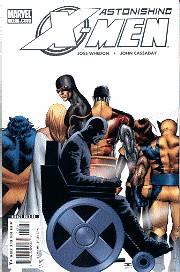
Astonishing X-Men #12 (Joss Whedon/John Cassaday, Marvel)
The arc wraps up mostly without redeeming itself, and it's too bad, because the first six issues of this title were great, and the next six were marred by cliched plotting and extreme lateness. At least the dialogue is still very sharp and, as Paul O'Brien noted, Cassaday could illustrate the phone book and it'd be worth reading. But I really think that Whedon could have come up with something more original and exciting than "the Danger Room comes alive and fights the X-Men" to focus on for six issues. The cliffhanger that sets up the next arc is sort of intriguing, but it's also a fairly familiar storyline. Plus we'll have to wait four months to find out if Whedon can turn it into something interesting. That said, this is still leagues ahead of the other core X-books, and even if it's sometimes disappointing, it's also the strongest take on the X-Men since Morrison left, so I'll certainly keep reading.
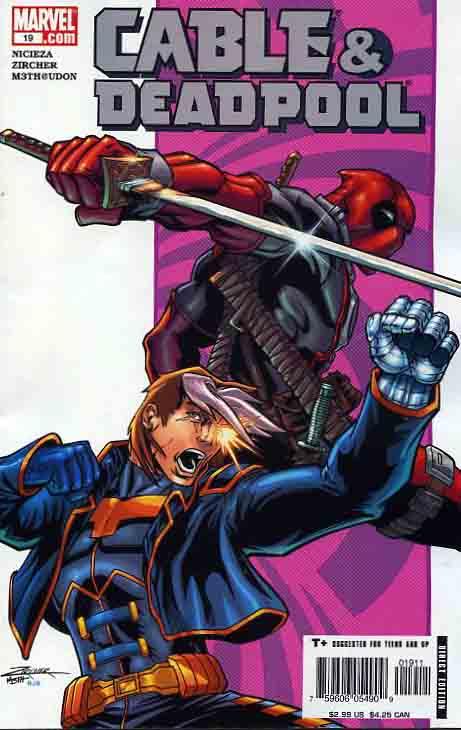
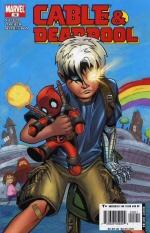
Cable & Deadpool #19 (Fabian Nicieza/Patrick Zircher, Marvel)
A sort of palate-cleansing issue between storylines, with Deadpool and Cable sitting in a bar, chatting about their childhoods. A little too serious for this book, I think, which is best when it's a goofy action-adventure, not a psychoanalysis of the lead characters. There were still some good lines, but it did feel like a placeholder issue, and I'm looking forward to some campy fun next issue with the new storyline.
The Expatriate #3 (B. Clay Moore/Jason Latour, Image)
Whoa. That was unexpected. I was mildly intrigued by the first two issues of this book, which were a little confusing but presented a stylish, fast-paced spy adventure with a man on the run from the CIA in the 1960s. Latour's art has a sort of classic thriller look to it, and the concept had promise. This issue starts with the hero in France after fleeing Mexico in the last issue, but it soon takes a strange turn, as he's captured by his pursuers and (spoiler alert) beheaded and offered up to some alien/robot thing. Yeah. So I was a little surprised by that, which is cool, I guess, but it changes the whole premise of the book into one I'm not sure I want to read. I had pretty much the opposite reaction to Randy Lander. I mean, I liked the stylish 1960s international spy thriller. I don't know about some weird sci-fi book, but I'll give it at least another issue to see where it's going. It just seems odd to me that, if you are going to have a twist that so jarringly alters the direction of the series, why you would wait until the end of the third issue. Anyone who would have liked the sci-fi book has long forgotten that this series even exists, and anyone (like me) who's been picking it up for what it was billed as may be feeling a little cheated. Especially since it hasn't exactly been shipping on time. If the change had come at the end of the first issue, I would have felt like I could either keep reading or not knowing what the book was about. But now I do feel a little like the rug has been pulled out from under me, and not necessarily in a good way.
Fell #1 (Warren Ellis/Ben Templesmith, Image)
Now this is the Warren Ellis I remember. Of the three new ongoing series Ellis has launched in the last few months, this is far and away the best. It's interesting that one of the people who popularized decompressed storytelling has come up with a book that tells a complete story in each issue and packs a huge amount of content into only 16 dense pages. I didn't even realize that the story was shorter, page-wise, than a normal comic until I read about it in the little essay at the back. Templesmith works well in the rigid nine-panel grid that Ellis has set up, retaining his weird, sometimes abstract style while telling a clear story that's easy to follow. Ellis also sets up a concept that has plenty of potential, with a seemingly normal police detective coming to work in a sort of magical realist city known as Snowtown, which teeters on the edge of the supernatural but never quite falls in. Although this issue does indeed tell a complete story, there's obviously an ongoing narrative as well, making this easily the most intriguing opening of an Ellis series in quite some time.

House of M #6 (Brian Michael Bendis/Olivier Coipel, Marvel)
Even when things happen in this book, it feels like nothing is happening. In this issue, the heroes team up to go to Genosha and confront Magneto. Everything proceeds exactly as you'd expect, with no surprises, not even the supposed twist at the end. I'm waiting for there to be some big revelations or world-changing consequences, but the story's almost over and there's nothing. Coipel's art is still very nice and Bendis gets in some decent character moments, but the only way I could imagine this being remotely interesting is if they condensed it to half the length and completely did away with all the hype about it being a big important event.

Revelations #1 (Paul Jenkins/Humberto Ramos, Dark Horse)
This was much more of a traditional murder mystery than I expected, given its Vatican setting. I suppose more of the religious themes will come out in future issues, but for now I like them in the background. It plays like a decent mystery novel, but Ramos's experimental style is kind of off-putting. His regular manga-influenced, cartoony, kinetic style probably wouldn't be appropriate, but this more serious style still has all the characters looking like children with growth disorders. I'm unsure about this, but I'll probably keep reading because I like Jenkins and it's been too long since he's written anything that I've had any interest in.

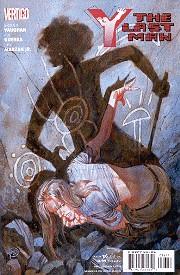
Y the Last Man #37 (Brian K. Vaughan/Pia Guerra, DC/Vertigo)
Vaughan throws in a great twist at the end of this issue that really ups the stakes for this series, and after three years of Yorick running around in secret, makes a whole lot of sense. After last issue's dense history of Yorick and Beth's relationship, their quest for reconciliation is sort of side-tracked in this issue, but the side track is actually more interesting, and I'm looking forward to seeing how it all comes together.

Friday, September 09, 2005

Movies opening this week

The Exorcism of Emily Rose (Laura Linney, Tom Wilkinson, Campbell Scott, Jennifer Carpenter, dir. Scott Derrickson)
My review in Las Vegas Weekly
I'm disappointed that this is getting such negative reviews, because I really think it's one of the best movies of the year. There are moments when it's hokey or clumsy, but I think casting all these excellent actors elevates any missteps in the scripting and lends the whole movie an air of respectability, which is something it needs to make it work. What bothers me the most about some of the negative reviews is the sort of closed-minded reactionary stance that people are taking about the religious/supernatural subject matter. I am not a religious person in any way (in fact you could even describe me as anti-religious), but the way that some critics are taking what to me is an endorsement of keeping an open mind about the potential unknown wonders of the universe as some right-wing screed against science and in favor of widespread exorcisms is really troublesome. I usually like Slate's David Edelstein, but his review is such condescending, elitist bullshit that it really kind of pissed me off. The AV Club's Scott Tobias does the same thing in his review. I mean, if you think the plotting was bad or the dialogue was cheesy or the acting was ineffective, okay. I may disagree, but okay.

But Edelstein calls it an "assault on the reality-based secular community" and "propaganda." Not only do I think he's overreacting to the movie's perceived message, but I also think that he's perceiving the message wrong. Yes, Derrickson sides with Wilkinson's priest, who is a man of deep faith. But the movie does present both sides of the argument, even depicting the same scenes twice, once from the demonic perspective and again from the medical perspective. I didn't find the prosecutor to be a caricatured villain; he's clearly as principled as Linney's defense attorney. And while the message is definitely to be open to the idea that medication isn't the only solution to life's problems, that's also the message of plenty New Age-y, hippiefied movies that have nothing at all to do with Christianity. If I were presented with this situation in real life, I'd not hesitate to convict the priest of negligent homicide. I don't believe in possession and I don't believe in God, and this movie didn't convince me otherwise. It did, however, represent a point of view that, whether people like David Edelstein and Scott Tobias (or me, for that matter) like it or not, is prevalent in America. And unlike the blood-gushing, heavy-handed Passion of the Christ (which, for the record, I thought was a good movie), it did so in a balanced and measured way. I don't think you have to share that point of view in order to find the film intriguing for the questions it raises; questions that, however much we may want them to, are not going to go away. Wide release

Wednesday, September 07, 2005

Weekend viewing

The Lady Vanishes (Alfred Hitchcock, 1938)
After having seen so many Hitchcock movies, I sometimes wonder if all that's left is minor work that's best left unseen. And then I see a movie like this, which, along with The 39 Steps, is considered a highlight of Hitchcock's early British work. I found The 39 Steps disappointing, a half-baked story that was fleshed out better in North by Northwest. But this is a clever, highly entertaining movie that's as much a comedy as a thriller (I actually got up about 25 minutes in to look at the Netflix sleeve and make sure that there was some sort of intrigue on the way). The central mystery is, of course, largely irrelevant, and the film is as much a wry commentary on the unknowingly deleterious effects of staunch English politeness as it is a suspense thriller about a woman who suddenly vanishes. I should know better than to underestimate Hitchcock, and this movie reminds me why.

The War of the Roses (Danny Devito, 1989)
Maybe I should have also known better than to rent this alleged black comedy, which is neither funny nor really dark, since it has this disturbingly Puritanical bent to it. Mostly it's just repugnant and pointless, slow and then really repetitive. It takes almost half the movie for the Roses to decide to get divorced, in which time you never get a sense either that they love each other or that they are descending into loathing for each other. All you get is a bunch of self-consciously "grotesque" camera angles from Devito and mean-spirited humor that makes no point whatsoever. Devito's lawyer character asks at the end of the movie, after telling the whole story, "What's the point?" and professes not to know. Neither do I.

Monday, September 05, 2005

Fall preview

Browsing through Coming Soon to prepare for putting together my Las Vegas Weekly fall movie preview, I noticed something strange: I am actually looking forward to seeing a large number of these films. Overall, this has been an abysmal year for movies. By the middle of the summer last year, I had already seen four of my top five films of the year (Eternal Sunshine of the Spotless Mind, Before Sunset, The Dreamers, Spider-Man 2). I would say that two of those (Eternal Sunshine, Before Sunset) are movies I consider among my favorites of all time. Now, maybe it's just that last year was an exceptionally good year for movies and this year is merely average, but I have seen very few films this year that I have really loved, and only two (Sin City and Nobody Knows - how's that for a double feature?) that I could imagine putting on a year-end top ten list.

Maybe my excitement looking over the fall releases is illusory - several high-profile movies I was excited for this summer (Batman Begins, Charlie and the Chocolate Factory, Star Wars) turned out to be disappointments, to varying degrees, and although I've seen plenty of movies that I've liked, there haven't been many that were especially memorable or outstanding. Still, the fall looks like an embarrassment of riches when it comes to adventurous filmmaking and compelling storytelling, or at least that's what I'm hoping from reading descriptions and watching trailers. Sure, there's plenty of uninteresting awards bait: hacky tearjerkers, boring literary adaptations, lame attempts at social relevance, a belated movie version of Rent (which qualifies as all of the above).

Yet amongst all this crap are a number of movies I'm genuinely excited to see, including several that are coming out in the dog days of September. Some, like David Cronenberg's A History of Violence and Dave McKean and Neil Gaiman's MirrorMask (both part of the continued insurgence of comics into film), are opening in platform releases and will end up in Vegas who knows when. But others are wide releases, like Joss Whedon's Serenity, the big-screen version of his Firefly TV show (which I thought was horribly overrated, but I love Joss Whedon so I'm still excited for this), and Andrew Niccol's Lord of War, which looks like another clever genre deconstruction from the writer-director of Gattaca and Simone (I think I am the only person who liked that one), and Tim Burton's stop-motion Corpse Bride. It's rare that September has interesting and worthwhile major studio releases (of course these could all end up sucking, but I hope not).

Even some of the awards bait, like Cameron Crowe's Elizabethtown and George Clooney's Good Night, and Good Luck, has me cautiously optimistic. I must be insane, because I'm actually looking forward to Woody Allen's new movie (Match Point). After such a dismal summer it's easy to forget the excitement of actually expecting movies to be good, but signs point to potential redemption in the rest of the year.

New comics 8/31

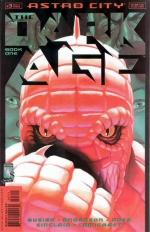
Astro City: The Dark Age #3 (Kurt Busiek/Brent Anderson, DC/Wildstorm)
I like that Busiek seems to be telling a complete story in the first book of this series, rather than just a piece of the big 16-part puzzle (although it's no doubt that as well). I wonder where he'll be going once some of this Silver Agent stuff wraps up next issue, but at the same time I'm glad that the different volumes won't just be arbitrary stopping points. This is my first time reading a big Astro City epic in individual issues rather than a trade, so I'm a little concerned about the story retaining momentum when it goes on hiatus for a while, but so far it's been an exciting read.

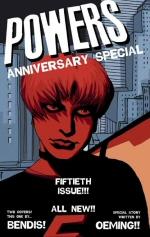
Powers #12 (Brian Michael Bendis/Michael Avon Oeming, Marvel/Icon)
The 50th issue, if you add together both volumes, so it's a big anniversary blow-out. This means a longer story which feels a little padded with a lengthy flashback, an extensive and mostly interesting interview with Bendis and Oeming, and an annoying extended letters page with comedians Patton Oswalt and Brian Posehn (whom I normally find funny) answering the letters. After a couple of letters I just skimmed it, because it was repetitive and unfunny. The story wraps up the Blackguard storyline, but it keeps Deena's secret as an ongoing subplot, which I liked. The Blackguard resolution was a little underwhelming, and the flashback sometimes felt like filler, but what Bendis is doing with Deena is really interesting and I trust that all the extra stuff will be leading somewhere eventually.

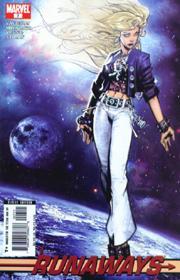
Runaways #7 (Brian K. Vaughan/Takeshi Miyazawa, Marvel)
This is a decided change of pace from the epic six-parter that opened the new volume, which was serious and had far-reaching consequences. I like that Vaughan spends more time just fleshing out the characters, and the twist at the end is more amusing and low key than the heavy stuff that was going on in the last arc, and probably dragged on a little longer than necessary. I'm glad that this is just a two-parter, and I hope Vaughan holds off a bit on doing another six-part opus. Miyazawa's light, cartoony art is a good fit for this story, but I still prefer Adrian Alphona's work (which I assume returns after this arc).

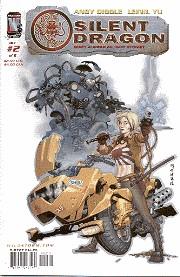
Silent Dragon #2 (Andy Diggle/Leinil Francis Yu, DC/Wildstorm)
This is a definite improvement over last issue for one main reason: It makes sense and I can follow the story. It also makes better use of the futuristic setting, and gives Yu some cool high-tech stuff to draw. I'm still not entirely sure what the overall story is about, or how some of the things from last issue relate to this issue, but at least I have some idea of what's going on.

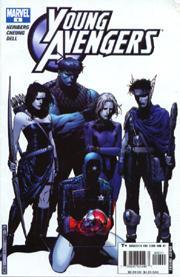
Young Avengers #6 (Allan Heinberg/Jim Cheung, Marvel)
Like Runaways, this series has opened with an epic, serious arc that dragged on a little too long, especially when this issue reveals that it was all a set-up to get the real team together and ready to go. But also like Runaways, it's got great dialogue and well-drawn characters and a breezy sense of old-school superhero fun, and the two books are still neck and neck as the best things Marvel's publishing. I'm glad to see that it's also following up the first arc with a two-parter, because that should give the series a better sense of momentum. This issue wraps up the Kang storyline a little confusingly, but it leaves room for it to be revisited at a later time. It also replaces some of the characters' crappy codenames with...different crappy codenames. That's a minor issue, though, and if they remain interesting characters, I don't really care that their names are dumb.

Also out this week: A bunch of stuff that I wanted to get, including Astonishing X-Men #12, Ex Machina #14, Revelations #1 and The Expatriate #3, which they didn't have at my local store for some reason. Hopefully I'll be able to pick them up next week.

Friday, September 02, 2005

Movies opening this week

The Constant Gardener (Ralph Fiennes, Rachel Weisz, Danny Huston, dir. Fernando Meirelles)
My review in Las Vegas Weekly
I remain conflicted about this, even though I wrote an overall positive review and talked it up pretty positively on CJOB this week. On one hand, it's definitely been overpraised by most critics, and it's the kind of praise that will very likely lead to undeserved Oscar nominations. It's also undeniably heavy-handed, and does play on liberal guilt in a way that kind of undermines the very people it's allegedly trying to help. On the other hand, it points out a genuine injustice, and I don't think that the filmmakers are being disingenuous in doing so. The praise may be excessive, but the film is absolutely stunning to look at and features mostly very good performances. Most importantly, I found it a rewarding viewing experience, which is ultimately why I recommended it. But I do understand why it has made some critics very uneasy. Wide release

Junebug (Embeth Davidtz, Amy Adams, Ben McKenzie, Alessandro Nivola, dir. Phil Morrison)
My review in Las Vegas Weekly
I really expected to like this movie. It's my kind of genre (slow-paced, talky indie drama) and it's been getting great reviews, and a friend and fellow reviewer told me about a month ago how great she thought it was. But it just didn't work for me, especially Amy Adams' performance, which people seem to love. I actually liked her better in Standing Still, this crappy movie I saw at CineVegas. At least she was restrained. I probably should have expected the disappointment, since this has definitely been the year of disappointing movies for me. Opened limited Aug. 5; in Las Vegas this week

A Sound of Thunder (Edward Burns, Catherine McCormack, Ben Kingsley, dir. Peter Hyams)
Why did I see this movie? I wasn't assigned a review, and there was every indication that it would be terrible. Yet I went anyway. I guess I was expecting that, even if it was bad, there would be some redeeming value in the camp factor (which was basically non-existent) or the just plain cool concept and source material (a Ray Bradbury short story about a time-traveling expedition to the Cretaceous, in which someone steps on a butterfly and creates a ripple effect that completely alters the future). But there was none of that. On a pure filmmaking level, this is easily the worst movie I've seen all year. Unbelievably terrible special effects, which would be almost unforgivable in a movie made for the Sci Fi Channel, let alone one that reportedly cost $80 million. Completely incoherent plotting that can't even retain a semblance of internal consistency with its own pseudo-science. Definitely answers anyone who's been wondering whether Ed Burns has a career anymore, or deserves one. Even Ben Kingsley, whose blindingly white hairpiece is the movie's only great camp element, can't do anything to save it. I was just hoping that one of the movie's incomprehensible time waves would come along and wipe out the technology used to make it in the first place. Wide release

Friday, August 26, 2005

New comics 8/24

Jack Cross #1 (Warren Ellis/Gary Erskine, DC)
First of all, I have no idea why DC is releasing this under their regular banner rather than Vertigo or Wildstorm. It's not a superhero comic, it's creator-owned and it's not set in the DC universe. Like Hard Time and Fallen Angel, it's an anomaly that I think may get lost in the shuffle. Mainstream DC universe readers may pass it up because it's not in continuity, and readers of more mature, creator-owned fare may pass it up because it's got the DC logo on it and they'll assume it's another superhero book. I hope I'm wrong about that, because this is an interesting book, probably a little better than Ellis' other recent ongoing series launch, Desolation Jones. Once again it starts with what seems like a stock Ellis protagonist and takes it in another direction. Ellis has set up a character with two very different sides, and it'll be interesting how he reconciles the left-wing activist with the government torturer. I'm glad he's doing books like this alongside his Marvel superhero work, because it gives me a place to still enjoy reading his stuff.

Spike: Old Times (Peter David/Fernando Goni, IDW)
I tend to stay away from licensed comics, because they often lose a lot in translation and/or are put together shoddily. Although I'm a huge Buffy the Vampire Slayer fan, I've only picked up a handful of related comics, only those written by people directly involved with the show (especially Joss Whedon himself). Despite that reservation, and the ridiculous $7.49 price tag, I picked this up thanks to the combination of Buffyverse characters and Peter David. It's an entertaining enough read, with good continuity touches for fans and some sharp dialogue, but it comes off as a pretty inconsequential story and probably isn't worth the money. Goni's art is a bit dodgy and rough at times, but David writes a nice little story.

Also out this week: The Middle Man #2, which I've ordered at my local comic shop thanks to my enjoyment of the first issue that I picked up in San Diego, but hasn't come in yet. I know you are all waiting with bated breath to hear what I think of it.

Thursday, August 25, 2005

Movies opening this week

The Aristocrats (documentary, dir. Paul Provenza)
My review in Las Vegas Weekly
This has really been a banner year for documentaries, and a better one than last year, I think, because there is more diversity. Last year it was all (or almost all) about the political documentaries, which got a bit repetitive. This year the high-profile documentaries are all vastly different, and do a lot more to show the power and flexibility of the form. Although I've found some of the hyped entries disappointing - in particular March of the Penguins and Mad Hot Ballroom - I'm still glad to see these sorts of films getting critical and box office attention. This film in particular I think is the best of the bunch. It's the kind of thing you'd expect to be repetitive, but Provenza does an amazing job of constantly finding new angles to explore, and it really does say so much about the nature of comedy while still being consistently very funny. I hope the subject matter doesn't put off Academy voters come Oscar time. Opened limited July 19; in Las Vegas this week

The Brothers Grimm (Matt Damon, Heath Ledger, Lena Headey, Peter Stormare, dir. Terry Gilliam)
My review in Las Vegas Weekly
Man, some critics have been really harsh on this one. Karina Longworth in Cinematical just tears it to shreds and really kind of insults Gilliam in the process. I can sort of see where people are coming from, especially given how long it's been since Gilliam made a movie and the kind of reputation that he's built up. But I think that this is a film that's getting slaughtered by expectations, that if Gilliam had released it a year or two after Fear and Loathing and on his way to something else, people would have been a lot more kind to it. It's not his best work, it's a little inconsistent, it's sort of predictable and compromised, yes. But it also looks great and has a lot of really strange, dark moments as well as a lot of really funny ones. And despite what some have said, it does have an intelligent subtext - about the way that imperialism stamps out local culture - it just doesn't explore it enough. Don't expect a masterpiece and I think you can easily enjoy this movie for what it is. Wide release

Tuesday, August 23, 2005

Weekend viewing

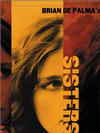
Sisters (Brian De Palma, 1973)
This is apparently the beginning of De Palma's Hitchcock phase, and it's not hard to tell that he's paying tribute to Hitch with this movie, which borrows from Rear Window, Psycho and Spellbound, just to name a few off the top of my head. It's interesting that when this first came out, people tore De Palma apart for being such a slave to Hitch's style, but nowadays "Hitchcockian" is almost exclusively a positive descriptor (it's been all over reviews of Red Eye, and rightfully so). I think the difference is time. When this movie came out, Hitch was still working, so aping him seemed like more of a rip-off. Now that he's long dead, it looks more safely like homage. Viewing this movie in the present, all the Hitchcock references didn't bother me; they enhanced the experience, and of course it helps that De Palma pulls them off for the most part very well. There's an odd pacing to this movie that's also taken from Hitch but doesn't really work as well, and the ending is sort of muddled. I doubt I'll ever see a De Palma movie I love as much as Carrie, but this shows that he was really an excellent director of suspense, and not just because he slavishly copied a master.

Monday, August 22, 2005

Excuses, excuses

Besides the overall box office slump this summer (which has been endlessly analyzed and dissected to the point of ridiculousness), Hollywood executives are trying to spin the spectacular failures of specific high-profile movies that were considered sure-fire successes. First, there was Ron Howard's Cinderella Man, which came out in June to mostly positive reviews and audience reaction, but did very weak numbers at the box office and slid off the charts very quickly. In the New York Times a few weeks later, Universal's Marc Shmuger gave this quote, blaming audiences for the film's failure: "Despite all protest to the opposite, that audiences are clamoring for an alternative, I guess what they're really looking for is what their behavior shows. That's terribly concerning." So, apparently the lesson here is: People don't want serious, adult dramas. People love mindless crap! They didn't go see this one movie, therefore we might as well just give up on serious movies about weighty subjects and make more gross-out comedies and horror sequels. Nowhere does anyone consider the idea that, hey, people do like serious, thoughtful dramas, but Cinderella Man was, I don't know, just not a very good movie. Imagine that! Thank goodness Hollywood knows exactly what audiences are thinking based on response to this one movie, and won't be overburdening movie-goers with anything that requires any thought. I was a little worried there.

Then there's The Island, which has gotten a lot more attention for its spectacular failure. Unlike Universal, who only learned one important lesson from the failure of Cinderella Man (audiences hate serious, adult dramas), the producers of The Island apparently learned several. Walter Parkes and Laurie MacDonald tell Zap2it that the problems with their movie included: a bad title, a concept that was too complicated and too original (even though they're being sued for plagiarism), and stars who were just not popular enough. In particular, Scarlett Johansson, about whom MacDonald says, "Even lesser television actresses, quite honestly, would have more connection to that audience."

So how do they learn from these mistakes? "What everyone will do now, though, is you'll probably be a little more conservative in what you spend, the kind of casting you need to feel assured you can open the movie, putting it out in a time you feel it has its own space," MacDonald says. Much like the producers of Cinderella Man, they've learned valuable lessons about what audiences want: titles that spell out in painful detail exactly what the movie is about; concepts that are neither complicated nor original; and lesser stars who may not be good actors but have been on enough vapid TV shows to have a "connection" to their audience (read: stupid teenagers). Again, there's never any thought given to the idea that The Island just wasn't very good. Or, as FameTracker put it in its satirical list of "reasons" for the film's failure: "America's unpredictable and sudden shift toward hating crap." It's enough to make Michael Bay want to punch a few penguins.

Friday, August 19, 2005

Movies opening this week

The 40-Year-Old Virgin (Steve Carell, Catherine Keener, Paul Rudd, Seth Rogen, dir. Judd Apatow)
My review in Las Vegas Weekly
This has nothing to do with the movie, but I had an interesting online discussion a few days ago about the usage of hyphens in the title. A friend of mine who works as the Assistant Editor at the Washington City Paper was appalled to see that the official title of this movie was apparently The 40 Year-Old Virgin, with a hyphen between "year" and "old," but not after "40." Being a professional journalist and copy editor (she was a colleague of mine at Prism Magazine when I was in college), she was outraged at this offense against grammar. I pointed out that the poster on the Rotten Tomatoes page and the IMDb page has all the hyphens intact, but that the opening credits in the actual film feature no hyphens whatsoever. (The official site features the partially-hyphenated version.) I am going to continue to refer to it in the correctly-hyphenated form, because I'd like to think that someone, somewhere who is involved with the movie bothered to look up how exactly to hyphenate people's ages, or happened to know it because they actually value proper grammar. For those of you not obsessed with proper hyphen usage, this is a pretty funny movie with a surprisingly mature message and one of the more convincing love stories in recent romantic comedies. It's also a good half hour too long, by which I mean the half hour by which it's too long is actually pretty good, but it still could stand to be cut. Wide release

Broken Flowers (Bill Murray, Jeffrey Wright, Sharon Stone, Jessica Lange, dir. Jim Jarmusch)
My review in Las Vegas Weekly
A few days ago, Angelica posted about the lack of good movie roles for women, and in particular older women. I wish I could say that this movie, which features some of the very best older women working in movies right now (Sharon Stone, Jessica Lange, Frances Conroy, Tilda Swinton), offers some of those roles, but as I noted in my review, it's just as male-dominated as any stupid sex comedy with hot, young, vapid women in the lead roles. Swinton, who is an absolutely brilliant actress and deserves infinitely more attention than she receives, gets something like three lines in the entire film. And all of the actresses play easy stock character types: Stone as the still-hot older woman who needs sex to validate herself; Conroy as the one-time flower child turned button-down real estate agent; Lange as the New Age-y earth mother who's now a trendy lesbian; and Swinton, playing wildly against type, as the angry biker chick. Now, I don't think this is a bad movie - although I don't think it's the masterpiece that some critics have claimed it to be - but it's clearly as much a male wish-fulfillment fantasy as The 40-Year-Old Virgin (one of the reasons I thought they drew interesting parallels for a dual review). In fact, Catherine Keener in The 40-Year-Old Virgin plays a more well-rounded character than any of the women in Broken Flowers, and does so in direct contrast to all the hot, young, vapid other women who parade through the movie. Steve Carell is a bigger feminist than Jim Jarmusch; who knew? Opened limited Aug. 5; in Las Vegas this week

Mysterious Skin (Joseph Gordon-Levitt, Brady Corbet, Mary Lynn Rajskub, dir. Gregg Araki)
My review in Las Vegas Weekly
It's hard to believe that the same Gregg Araki who made The Doom Generation made this movie. It handles child sexual abuse with sensitivity but not timidity, and never becomes prurient or crass like...well, like a Gregg Araki movie. Joseph Gordon-Levitt is excellent, but I thought Brady Corbet was a little flat at times, and the movie feels a little lopsided with their two characters given equal attention. Still, a very moving and worthwhile film. Opened limited May 6; in Las Vegas this week

Red Eye (Rachel McAdams, Cillian Murphy, Brian Cox, dir. Wes Craven)
My review in Las Vegas Weekly
My friend (and frequent commenter) Katie told me once that she would know that I had finally succumbed to irredeemable elitism if I ever gave a Wes Craven movie a bad review. Well, this is the first Craven movie I've officially reviewed, and I'm glad to say that I am in the clear, since I gave it a positive review. It's not Craven's best work, but it's certainly better than, say, Scream 3, and the Hitchcockian middle half-hour is near-perfect suspense. Craven has no projects in the works right now, and I hope the positive reviews this is getting make up for his harrowing experience making Cursed and convince him that he needs to continue making horror films, because he's nearly the only competent person doing that anymore. Wide release

New comics 8/17

After last week's deluge, this week brings a drought.

Cable & Deadpool #18 (Fabian Nicieza/Patrick Zircher, Marvel)
This wraps up the "Enema of the State" storyline, and while Nicieza's dialogue is as clever as ever and his characterization is still rich, the book once again becomes bogged down in his biggest writing flaw, which is over-plotting. This issue is basically one long expository speech shared by Forge and Siryn about what happened to Deadpool in all those alternate realities and how Cable has returned. It's funny to listen to Deadpool mock all the convoluted technobabble, but it doesn't change the fact that it's still convoluted technobabble, and the issue is full of it. I do like how Nicieza blithely dismisses the whole House of M deal, though.

Sunday, August 14, 2005

New comics 8/10

When it rains, it pours. Busy week, plus trying out a few new titles that ultimately weren't really worth the trouble.

Fables #40 (Bill Willingham/Mark Buckingham, DC/Vertigo)
Willingham finally reveals the Adversary, and it's...exactly who he's been hinting it would be all along. Which I think is good - no need to throw in a twist that wouldn't make sense with where the story has been leading. He offers a satisfying backstory for who the Adversary is and why he does what he does, and even almost makes him sympathetic, which is an impressive feat. Buckingham makes a welcome return on art, illustrating the flashback sequences in a cutesy storybook style that is a nice contrast to their gruesome content.

Ferro City #1 (Jason Armstrong, Image)
This has a very similar concept to Dean Motter's Terminal City and Electropolis series, with a hard-boiled noir-style detective in a futuristic city filled with robots. Like Motter's work, it marries Dashiell Hammett to retro-futurism, but it's only a mild success. Armstrong's art is sometimes too cartoony for the serious tone, and you really need color to fully convey the scope of the city of the future. Armstrong's writing is hit-and-miss, but the whole thing has a been-there-done-that feel that doesn't make me excited to pick up the next issue.

Gravity #3 (Sean McKeever/Mike Norton, Marvel)
McKeever gets in to some more serious stuff this issue, with Gravity getting his ass handed to him by a villain and considering giving up being a superhero. In some ways, this is a very predictable story, but at the same time it has a certain edge to it since Gravity isn't an established character, so there's no guaranteed status quo that everything will return to. This issue ended in an unexpected way, but I have a feeling that by the end of the series, things will be wrapped up pretty positively. Which is fine, since this is just about fun superhero storytelling, and it's succeeding at that.

House of M #5 (Brian Michael Bendis/Olivier Coipel, Marvel)
It's gotten to the point where even the guy at the comic book store is asking me why I'm buying this. For the record, it's not because I'm some Marvel zombie who has to buy every "important" crossover they put out. I honestly thought I'd like this: I do like a lot of Bendis's writing; this book is full of characters I like and am familiar with; and I generally enjoy Marvel crossovers that are suitably epic and tell a fun story. At this point I am still buying it only because I figure since I already bought half I might as well finish out the story. There is also still that small sliver of hope that something interesting might happen. Not in this issue, though; instead it's exactly what you'd guess would happen. Now that some of the heroes know that Layla Miller can make others remember the world the way it was, they go around and make a bunch of other heroes remember the old world, so they can form a team and defeat Magneto. That's it. Bendis does get a nice moment in with Peter Parker feeling tortured over all he's lost in the real world, but otherwise it's another pointless issue that advances the story a tiny bit in a completely bland and predictable way. I can only imagine that the climax is spectacular if it's really going to warrant all these extensive changes in the Marvel universe. I learned my lesson, though; I won't be picking up any of the follow-up books.

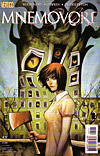
Mnemovore #5 (Hans Rodionoff & Ray Fawkes/Mike Huddleston, DC/Vertigo)
The story heads toward its climax, and this issue is more action than horror. I like this story, and I still find Huddleston's art awesomely creepy, but I think it's kind of lost focus on what it's supposed to be about. We get back to some of Kaley's family issues this time, but it sort of seems like too little, too late.

The Necromancer #1 (Joshua Ortega/Francis Manapul, Image/Top Cow)
I read about this online months ago and it sounded intriguing, a sort of mystical Buffy the Vampire Slayer type of riff. I should have known better than to trust Top Cow, since this is just a bunch of generic monsters and high school cliches, with inconsistent art thanks to five different inkers. Not bad, but totally mediocre and not worth picking up.

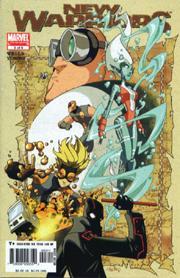
New Warriors #3 (Zeb Wells/Skottie Young, Marvel)
I'm glad that, at least according to Skottie Young, old Warriors fans are getting into this book. If there were any lingering doubts, this issue proves that Wells knows exactly what he's doing with the Warriors, referencing past continuity, forwarding some interesting character development and showing us what characters were up to in between this series and the last one. This is the first issue that isn't only about the main done-in-one story, and it's nice to see a little ongoing plot being put forth. I'm bummed that this isn't likely to get bumped up to an ongoing series, since I think Wells could really do a lot with the Warriors beyond the reality TV storyline.

Noble Causes #12 (Jay Faerber/Fran Bueno, Image)
Another solid issue, wrapping up several long-standing plotlines, with a classic soap opera twist at the end. I'm definitely looking forward to next issue's introduction of the nefarious Blackthorne family, who look like perfect nemeses for the Nobles and should give the book an added soap operatic dimension.

X-Men #174 (Peter Milligan/Salvador Larroca, Marvel)
Well, I gave Milligan two arcs to impress me, and while his work isn't as bad as what Claremont's been doing on Uncanny or what Austen did on this book in the past, it still hasn't grabbed me enough to care. This concludes the "Bizarre Love Triangle" arc, which after four issues leaves us pretty much where we were before. It raises a few questions about Mystique that I have no idea when it'll get around to answering, and Milligan's style still just seems a little off for this kind of superhero storytelling. Next issue's Black Panther crossover is a perfect jumping-off point, since I don't really want to buy two issues of a book I'm not reading just to understand the story, anyway. When Astonishing X-Men goes on hiatus next month, it'll be the first time since I started reading comics that I'm not regularly reading the X-Men. Which might make me sad, but mostly I just feel relieved. (I'll of course be back on board when Astonishing returns next year, though.)

Friday, August 12, 2005

Movies opening this week

Cronicas (John Leguizamo, Leonor Watling, Damian Alcazar, dir. Sebastian Cordero)
My review in Las Vegas Weekly
This is one of those movies that gets a certain amount of mileage out of just being foreign. Not that it's a bad movie - it's actually a pretty good one, with an interesting ending - but a lot of the issues it tackles have been explored to death in American films. By moving the setting to Ecuador and having American Latinos as main characters, it adds new wrinkles to a lot of old ideas and gives them a fresh perspective. Opened limited July 8; in Las Vegas this week

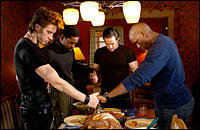
Four Brothers (Mark Wahlberg, Tyrese Gibson, Andre Benjamin, Garret Hedlund, dir. John Singleton)
My review in Las Vegas Weekly
I really did expect to like this movie. I wanted it to be Singleton's return to respectability after shaming himself with 2 Fast 2 Furious. It had so many interesting issues - race, class, family - to tackle. It had a pretty good cast. But it wasted all that to be a cheap revenge fantasy, and dashed my hopes the Singleton has any intention of picking his integrity back up. Wide release

Last Days (Michael Pitt, Asia Argento, Lukas Haas, dir. Gus Van Sant)
My review in Las Vegas Weekly
I saw this at CineVegas back in June and was mildly disappointed. I love the way it looks - Harris Savides might be the best cinematographer working today - but I think the incredibly slow, ponderous style that Van Sant has used on his last three films has definitely run its course (and apparently he thinks so too, since his next project is a film version of the novel The Time Traveler's Wife). I thought Elephant was ultimately effective, but this just didn't seem like the right sort of event to warrant this treatment. I think it'll be a long time before someone makes a really insightful movie about Kurt Cobain. Opened limited July 22; in Las Vegas this week

The Skeleton Key (Kate Hudson, Gena Rowlands, Peter Sarsgaard, dir. Iain Softley)
Kate Hudson didn't even win the Oscar she was nominated for for Almost Famous, but she's still following the path of Oscar winners like Cuba Gooding Jr. and Halle Berry, starring in crappy mainstream movies with little to no redeeming value. Like this one, for example. It does have a good supporting cast, but only Rowlands gets to have any fun chewing scenery. Sarsgaard puts on a terrible Southern accent, and John Hurt is wasted as a stroke victim who barely even speaks. Writer Ehren Kruger has cornered the market on twisty genre pictures, but he really only succeeds when he's got a good director to elevate his competent but uninspired material (Wes Craven on Scream 3, Gore Verbinski on The Ring, Terry Gilliam on the upcoming Brothers Grimm). Softley isn't that director, and despite a nicely dark ending, the movie doesn't work up enough suspense to make it resonate. Wide release

Monday, August 08, 2005

Over There, Battlestar Galactica, and depictions of war on TV

I've been watching Sci Fi's new Battlestar Galactica series (Fridays, 10p.m.) this summer, after hearing many good things about it both from critics and from people I know. It was a little tough to get into at first, mainly because I haven't seen the first season and there are so many characters and intricate plotlines to keep track of. I think that after four episodes I've got a decent handle on it now. I haven't found it as great as the hype made it out to be, but that's at least partly due to heightened expectations and partly due to not having gotten in on the story at the beginning. It's still one of the best pure sci-fi shows to come along in a while, better than the cheesy guilty pleasure The 4400, and dark without being too much of a downer.

What it also is, interestingly enough, is an effective allegory about war and political turmoil, taking on serious issues through the lens of space-faring and robot-fighting, in the grand sci-fi tradition. This season's early episodes depicted a group of people trapped in enemy territory, fleeing from the evil robotic Cylons as tensions within their little unit mounted. Galactica isn't afraid to show characters dying, or to depict the unexpected situations that soldiers can be thrown into ("I just joined to pay for dental school," laughs one inexperienced fighter in a recent episode). Off the battlefield, the show gets into politics, depicting a military coup, an imprisoned president and a democracy in peril. It's got a war-time leader who keeps the press in the dark and detains civilians indefinitely under suspicion that they might secretly be working for the government's enemies. Sound familiar?

Contrast that with the new FX show Over There (Wednesdays, 10 p.m.), the first three episodes of which I watched to write about it in my TV column for Las Vegas Weekly. While Galactica gets glowing reviews and high ratings but not that much mainstream attention, Over There has been covered extensively in the months leading to its debut, and not just by TV critics. The first TV show to ever depict a current war, Over There follows a unit of U.S. soldiers in Iraq. It tackles head-on the issues that Galactica only depicts analogously, but does so in a much less subtle, more predictable and cliched manner. The characters on Over There are almost all stock war-movie stereotypes, and the plots are often clumsy and pretentious. Over There makes such an effort to depict U.S. soldiers favorably and to sidestep any political statements that its sensitivity can get in the way of its storytelling.

Since it has gotten such attention and has been under such scrutiny, Over There has to be very careful in the way it tells its stories and paints its characters. As a result, it's a show that brazenly takes on a controversial topic but does so in a very safe, unadventurous way. Galactica, on the other hand, has the luxury of all sci-fi, which is that anything potentially offensive (to any political or social group) can be easily explained away as fiction, taking place in a far-flung time and a far-flung place. Ironically, the best way to depict such a volatile subject as the current war and political climate is not to portray it directly, but to couch it in an allegory that not only makes stronger statements, but also makes for much better drama.

Saturday, August 06, 2005

New comics 8/3

Wildsiderz #1 (J. Scott Campbell with Andy Hartnell, DC/Wildstorm)
Campbell's work, in particular his Danger Girl stuff, is one of my greatest guilty pleasures in comics. His stories are fluff and his art is pure eye candy depicting unrealistically-proportioned women, but it has such an exuberant sense of fun that I can't resist it. Campbell's regular writing partner Hartnell writes a lot of clever dialogue and fast-paced tales for Danger Girl, and doesn't get nearly enough credit. I haven't even minded that much when Hartnell has taken on the writing duties solo on some of the Danger Girl one-shots. Wildsiderz, though, is no Danger Girl. While DG was all about T&A, double entendres, and spy movie conventions, Wildsiderz is a tamer, more kid-friendly story, and it plays like a Saturday morning cartoon. A decent one with nice art, but not one with a whole lot of personality or cleverness. Plus, Campbell's going with digital inks for the first time instead of using longtime inker Alex Garner, and his work looks less polished as a result. It's an okay effort, but I won't pick up future issues; instead I'm more likely to get the new Danger Girl series with art by someone other than Campbell.

Y the Last Man #36 (Brian K. Vaughan/Pia Guerra, DC/Vertigo)
Vaughan finally starts to delve into what happened to Yorick's girlfriend Beth, and he does it with a sort of dream sequence/flashback story that gives us lots of little bits of information all at once. The result is that by the time Beth awakes at the end of the issue with the certainty that Yorick is alive, we have a real sense of who she is and what their relationship was like. There's not a lot going on in this issue plot-wise, but it's the perfect set-up for what's to come.

Friday, August 05, 2005

Movies opening this week

The Dukes of Hazzard (Johnny Knoxville, Seann William Scott, Jessica Simpson, dir. Jay Chandrasekhar)
My review in Las Vegas Weekly
You know, I just don't have the energy to complain about endless remakes of TV shows or how Hollywood has no ideas or how an entire movie appears to be constructed around a car and Jessica Simpson's ass. This movie isn't worth the effort. I will say this, though: I, unlike many critics, have a fondness for the Broken Lizard guys, and I am happy that they are getting the chance to make another movie after Club Dread bombed, and that it's a buddy comedy set in ancient Greece. If they had to whore themselves out making this movie to get there, well then I'm okay with that. Wide release

Sunday, July 31, 2005

Weekend viewing

Croupier (Mike Hodges, 1998)
I saw Hodges' second collaboration with Clive Owen, I'll Sleep When I'm Dead, when it came out a couple of years ago, and was underwhelmed. It was cold and slow and no fun at all. This is much better, though, with a dark sense of humor and a slick plot, and probably the best performance I've seen from Owen. Like all good noir, it's about 90% narration, but it's coolly ironic narration, and there are at least two femme fatales. The ending confused me a bit, but otherwise this was a near-perfect thriller.

Infernal Affairs (Andy Lau & Alan Mak, 2002)
It's strange to me that this is being remade by Martin Scorsese, because it's so heavily influenced by American thrillers that a remake seems especially redundant. For all its praise and success (two sequels followed in quick succession), it's a stylish but empty movie, and it seems to me that if it were an American film it wouldn't have gotten so much attention. There is one really taut and suspenseful sequence, with a drug bust played on both sides by the gang mole and the police mole, but otherwise you never get a sense of who these characters are or what they're going through living stressful double lives. As a result, it's hard to care about all the conversions and confrontations at the end. I hope Scorsese will add some depth, but I still see no reason for this movie to be remade at all.

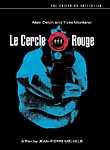
Le Cercle Rouge (Jean-Pierre Melville, 1970)
This has got to be the longest, slowest heist movie I have ever seen. I realize it's considered a masterpiece, and I did enjoy the last Melville movie I saw (Bob Le Flambeur), but for long stretches of the film I was honestly bored. The central heist sequence, which doesn't come until 90 minutes into the movie, is impressively orchestrated and almost entirely dialogue-free. But overall I found this minimalist to the point of distraction, and a bit of a disappointment.

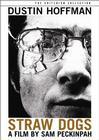
Straw Dogs (Sam Peckinpah, 1971)
Maybe this is an odd point of entry for Peckinpah films, since he's known mainly for his Westerns, but it's obviously got a lot in common with that genre, with the lone man required to step up and make a stand against encroaching lawlessness. One of the things I love about Michael Mann movies is the way they so thoroughly explore the idea of masculinity, and Peckinpah's obviously doing the same sort of thing in this film (and, it would appear, in most of his other work as well). At first it seems like Peckinpah has unbridled contempt for Dustin Hoffman's passive-aggressive nebbish of a character, and that only when he gives in to violence and brutality does he live up to the director's idea of manliness. But in the course of becoming a man, Hoffman's David loses everything, and ultimately Peckinpah seems to be equating the natural masculine state with ugliness and even inhumanity. I kind of prefer Mann's more layered appraoch, but damn if that siege sequence wasn't awesomely constructed.

"Creator-created"

In his column this week, Steven Grant casually tosses off a phrase that I believe he is the first to use: "creator-created." On the surface, this is a ridiculously meaningless term; aren't all comics created by their creators? Well, yes, in the sense that even characters like Batman, Superman and Spider-Man were originally thought up by the first people who wrote and drew their adventures. But the creators working on those characters today are not the ones who created them; Batman, Superman and Spider-Man comics, as well as most company-owned titles, are not creator-created. They are created today by people who are simply stewards of company property, neither the first nor presumably the last creators to work with those characters.

Generally there is an acknowledged dichotomy in comics between "creator-owned" and "company-owned" characters. Creators are generally thought to have more emotional investment in creator-owned properties, because not only did they come up with the characters and concepts, but they also own the copyrights (hence the term). On the flipside, oftentimes creators, especially those who work regularly on properties that they own, are assumed to have less of an investment, both emotional and financial, in characters they didn't create and are merely taking care of for a company that relies on those characters for things like movies, TV shows and various licensing endeavors. Of course, creators have far more freedom with their owned creations than they do with company characters. This explains, for example, why Warren Ellis's work on Ultimate Fantastic Four bored me, while I find Desolation Jones much more interesting. Ellis is a caretaker for Marvel characters so he can pay the bills, but he puts a lot more of himself into Desolation Jones, which is all his.

For me, knowing that a creator (generally a writer, but often in tandem with an artist) has that investment in a book makes me want to put my investment into it, too. I also know that it's more likely that the creative team will stick around, and that they'll have the freedom to tell the kind of stories they want without editorial interference. I know that when Brian Vaughan, say, decides that Y The Last Man is over, Vertigo isn't going to bring in some other writer to keep it going because it still sells well, or because there's a movie in development. Vaughan owns it, so he does what he wishes with it.

About half of the comics I read monthly are creator-owned. But what about the rest? Leaving aside X-Men, which is on probably its 10th or 12th writer since I started reading it, and is more a habit than anything else, most of the rest of what I read is what Grant calls creator-created. Allan Heinberg created all of the characters in Young Avengers, even if they're connected to other characters in the Marvel universe. Likewise Brian Michael Bendis for The Pulse (at least where the main character is concerned). I'm not reading Warren Ellis on Iron Man, but I will be picking up his new Marvel book Nextwave, which features obscure Marvel characters so thoroughly reinvented that he might as well have created them. Even though these books are just as fully owned by their respective companies as Batman, Superman and Spider-Man, there is that same sense of investment and control on the part of the creators as there is with creator-owned books, even if it's sort of illusory. If Marvel wanted to, they could fire Brian Vaughan from Runaways and hire someone else to take over. But it seems unlikely, because Vaughan is as inextricably linked to that book as he is to Y. I know that I and most other readers wouldn't keep buying the book if he were dumped (or Heinberg from Young Avengers, Bendis from The Pulse, etc.).

Grant lumps creator-created books in with creator-owned books as concepts that the industry has hostility toward these days, and he's mostly right. There is a resistance to new concepts across the board; in a way, it's a resistance to creation. People often focus on the idea that big companies are afraid of creators owning their characters in a financial sense, but in a way they seem just as afraid of the creators owning them in a more spiritual sense. It's most profitable for Marvel and DC if characters are much more popular than their creators, but in the case of something like Runaways, that's just not true.

Although the short-sighted view makes it seem that creator-creation is bad for comics companies, in the long term it's great. Eventually Brian Vaughan will get tired of writing Runaways, and if he gives his blessing to a new creative team, then fans like me will stick around and Marvel will have acquired another property to be shepherded along like Spider-Man and the X-Men. As a reader, I find the most valuable thing to be reading a book that the creators care about creating, that seems as exciting to create as it is to read, that isn't just a cog in a machine. Even if, when it comes down to financial reality, creator-created books are cogs in machines, the respect given by companies to new ideas and to an emotional investment in them can make all the difference.