Friday, July 27, 2018

Shark Week 4: 'Sharkansas Women's Prison Massacre' (2015)

For the most part, I've tried to find movies with at least some redeeming cinematic value for this latest edition of Shark Week, but when putting together the list of stuff to watch, I knew I had to include one movie solely on the basis of its endearingly dumb title. The final choice came down to Raiders of the Lost Shark and Sharkansas Women's Prison Massacre, and Sharkansas won out because it looked like it might be a marginally more entertaining movie (plus "Sharkansas" is a more creative and nonsensical pun). Obviously this is not a good movie, and really the title is the best part about it, so I probably could have just had an appreciative chuckle at that and moved on.

Of course, that's not what I did. I watched the whole thing, which I can't exactly recommend. For starters, there's no prison in this movie, although most of the main characters are in fact inmates at a women's correctional facility. The closest they get to prison comes at the beginning of the movie, when six female inmates (all dressed, of course, in denim cut-offs and tight white tank tops, apparently standard prisoner attire in Arkansas) get into a van marked "Arkansas Department of Corrections" from what looks like a low-slung trailer. From there, the van heads off into the woods, where a fracking operation has inadvertently unearthed a prehistoric underground ocean and released the giant ancient sharks living there (y'know, under Arkansas).

These sharks can apparently burrow in the ground as well as swim in the water, and the movie often depicts them as tunnels of dirt that look like Bugs Bunny taking a wrong turn at Albuquerque. They're more like the creatures from the Tremors movies than aquatic predators, although they do still attack from marshes and underground streams, including when the main characters decide that the best way to escape from the subterranean sharks is to, uh, head into some caves. Keeping the sharks underground the whole time presumably allows the filmmakers to save money on special effects, since the sharks themselves only show up onscreen a handful of times. There's also very little gore in this movie, even though many characters get eaten alive, with most of the kills happening offscreen.

And despite the presence of numerous well-endowed actresses in skimpy outfits, there's no nudity or sex in this movie either, so it doesn't offer much to prurient interests of any kind. There's minimal humor in the screenplay by William Dever and director Jim Wynorski, although Traci Lords (apparently having entered the "world-weary veteran cop" phase of her career) is amusing as the detective attempting to track down the missing inmates. Wynorski is a bit of an exploitation legend, who's churned out dozens of movies including one genuine cult classic (Chopping Mall); several cash-in sequels (The Return of Swamp Thing, 976-Evil II, Ghoulies IV); other ridiculous creature features (Piranhaconda, Camel Spiders, Komodo vs. Cobra); and a bunch of straight-up softcore porn. Sharkansas was probably just another day at the office for him, throwing together some boobs and some blood to go with a silly title dreamed up for marketing purposes. The end result is nothing more, and nothing less, than that.

Thursday, July 26, 2018

Shark Week 4: 'Deep Blue Sea 2' (2018)

The original Deep Blue Sea has become something of a cult classic, skirting the line between campy and clever, and it remains one of my favorite silly shark movies (as well as one of the highlights of director Renny Harlin's uneven body of work). I guess it's built up enough of a following to be worth a cheap brand extension, in the form of this straight-to-video "sequel" that is more like a bargain-basement remake. None of the characters or storylines carry over from the previous movie, and instead Deep Blue Sea 2 mostly rehashes the ideas from its predecessor, only in a cheaper, less engaging form.

Once again, the action takes place at a remote research facility in the middle of the ocean, in this case off the coast of South Africa, where scientists are doing top-secret research using sharks as test subjects. Here, billionaire pharmaceutical titan Carl Durant (Michael Beach) is using bull sharks (instead of mako sharks as in the original) to develop a drug that will unlock the potential of the human brain (this is the latest movie to trot out the tired fallacy about humans only using 10 percent of their brains). Why does he need to develop this drug? To prepare humans for the coming war against super-intelligent machines, of course! Sadly, this bizarre motivation only gets explored in a few lines of dialogue, although Beach gives the movie's best performance by completely committing to Durant's megalomania.

In his effort to defeat super-intelligent machines, Durant has instead created super-intelligent sharks, which, uh, doesn't seem like a very good trade-off. These sharks are so smart that at one point there is a scene of a shark eavesdropping on the human characters' conversation through a porthole! Of course, the sharks get loose on the day that Durant has invited absurdly named shark conservationist Dr. Misty Calhoun (Danielle Savre) and a couple of other disposable scientists to visit the lab, and Misty has to use all her shark-conserving skills (and team up with a hunky former Navy SEAL) to get herself and the rest of the crew out of the isolated lab alive. (Spoiler alert: Most of them do not make it.)

Director Darin Scott (whose credits include a Lifetime movie called Megachurch Murder and a direct-to-video sequel to House Party) and the three screenwriters dutifully re-create some of the iconic elements of the original, including the famous scene in which a shark jumps out of the pool in the middle of the lab to eat Samuel L. Jackson mid-speech (the version here is decidedly less amusing). They also throw in a scene of Misty in her underwear in a similar manner to Saffron Burrows' character in the previous movie, although less elegantly, and then make sure that Misty keeps her wetsuit unzipped enough to show plenty of cleavage for the rest of the movie.

Mostly they have the characters wander around a bunch of poorly lit corridors in water up to their waists (poorly lit corridors being a hallmark of low-budget genre movies), while some CGI sharks occasionally show up to chomp on them. The biggest shark-related innovation is that one of the sharks has given birth to a bunch of baby sharks, who swarm like piranhas when they kill. It's a good way to save on effects, since all that's needed to indicate a shark attack is a bunch of churning water. That shortcut pretty much sums up this cut-rate movie, which is far from the worst shark B-movie out there, but in no way lives up to the campy entertainment of its namesake.

Wednesday, July 25, 2018

Shark Week 4: 'The Sharkfighters' (1956)

Its title conjures up images of strong men punching sharks in the face, but The Sharkfighters is actually a dull docudrama with a stolid patriotic tone, based on the real-life Navy research into creating a shark repellent during World War II. There is one deadly shark attack in the movie, and plenty of footage of actual sharks, but the characters mostly treat the sharks with a detached scientific attitude. Even main character Lt. Cmdr. Ben Staves (Victor Mature), who has a personal vendetta against sharks after they killed much of his crew following the sinking of his battleship, mostly keeps his attitude calm and clinical, after he's assigned to the so-called Project Shark Chaser unit on the Isle of Pines in Cuba.

Since they can't just ask Batman, the Naval scientists of Project Shark Chaser use the unusually shark-infested waters around the Isle of Pines to test various compounds for their shark-repelling abilities, in the hopes of developing a formula that can be used by U.S. sailors and pilots who find themselves stranded at sea. Ben clashes with Naval ichthyologist Lt. Cmdr. Leonard Evans (Philip Coolidge), who prefers a methodical and slower approach to research and testing, and young Naval chemist Ensign Harold Duncan (James Olson), who wishes he were serving on the frontlines instead of in a lab on a peaceful island. But those conflicts are exceedingly mild, and the movie proceeds at a leisurely pace, although it only runs 74 minutes.

After one of the dumbass local teens working with the Americans gets himself killed by a shark, things seem like they might get serious, but even that incident is just a blip in the project's progress. Eventually when the team gets close to a solution, Ben insists on speeding up the testing process, and in the movie's finale he volunteers himself for a human test, to be absolutely sure that the formula works. That's not until the final 10 minutes or so, though, and even when Ben is in the water, deliberately attracting sharks to see if the repellent works, there isn't a whole lot of suspense. Mature is such a wet blanket that Ben's anger at sharks and post-traumatic stress barely come across, and the movie isn't really interested in character development.

Aside from the shark footage, the best thing The Sharkfighters has going for it is the local color. It was shot entirely on location in Cuba, when such a thing was easily possible for American movies, and it features some gratuitous (but enjoyable) scenes of Ben and Leonard out and about in Havana, checking out local clubs and dancers. Karen Steele brings a bit of feistiness to her role as Ben's wife, and it's fun to see the cosmopolitan life in Havana that existed at the time. There isn't as much of the village life on the island, but the funeral scene of the teen who gets killed by a shark is a moment of stark naturalism in the middle of hokey patriotism. More of that, and less of Mature's bland manliness, could have helped make this movie slightly more memorable.

Tuesday, July 24, 2018

Shark Week 4: 'Shark Tale' (2004)

In my review of Shark Tale on its initial release in 2004, the only praise I had for the DreamWorks animated movie was for its "impressive visuals," but 14 years later, the visual style has not aged well, and watching the movie again recently I couldn't find a single good thing about it. It's painfully dated despite not being all that old, and what was once cutting-edge animation looks clumsy and artificial. Plenty of animated movies from years past still look great despite their outdated techniques because there's creativity and artistry behind the images, regardless of how they were created, but Shark Tale has nothing but crass commercialism as its motivation, and that shines through even more clearly when it's not covered by state-of-the-art CGI.

Looking back at that review, I discovered that there was apparently a protest against the movie at the time by some Italian-American advocacy group, which seems sort of prescient for the current age of constant outrage. It's the kind of thing I would usually ignore, but this movie is built on so many lazy ethnic stereotypes that it's impossible to just write them off as coincidental. Shark Tale isn't necessarily morally offensive so much as it is offensively shoddy, reliant on those stereotypes as well as tons of empty pop-culture references and product placement in place of any actual jokes. It's yet another animated movie in which non-human entities populate a human-like world, but the fish metropolis of Shark Tale is created with virtually no imagination, merely swapping out a few fish-based puns for the names of everyday activities, people and products and then grafting them onto a "perils of fame" story that makes no sense.

Will Smith tries way too hard as the voice of slacker fish Oscar, but at least he's the one person involved in the movie who seems to be trying at all. Oscar has big dreams but lacks the follow-through to pursue them, instead working a dead-end job at the local whale wash (it's like a car wash, but with whales!). All the fish in the city live in fear of the sharks, who've been imagined here as Godfather-style gangsters, led by Don Lino (Robert De Niro). When Oscar is mistaken for the killer of a shark who died accidentally, he runs with the idea, becoming rich and famous as the "shark slayer." Meanwhile, Don Lino's effeminate son Lenny (Jack Black), who refuses to eat other fish, enlists Oscar to help him escape his judgmental family.

Lenny's storyline is a sort of half-hearted metaphor for coming out of the closet, although he's pretty much a mincing stereotype, in line with the other broad stereotypes throughout the movie. Oscar learns a hollow lesson about staying true to his roots and telling the truth, thanks to being torn between the wholesome best friend who pines for him (voiced by Renee Zellweger) and the sultry, shallow temptress who just wants him for his money and fame (voiced by Angelina Jolie). Those are basically the only female characters in the movie, so you can add sexist stereotyping to all the other gross oversimplifications in the story. The shark/gangster connection doesn't even hold up, as the family-friendly story requires Don Lino and his gang to eventually make friends with the fish and agree to stop eating them, for no good reason. Maybe the sharks will just starve? It doesn't matter, because in the manner of all shitty modern CG-animated movies, Shark Tale just ends with a giant dance party set to an annoying pop song (a painfully rewritten version of "Car Wash" performed by Christina Aguilera and Missy Elliott), shifting all further plot questions to a sequel that mercifully was never made.

Monday, July 23, 2018

Shark Week 4: 'Tiger Shark' (1932)

More of a melodrama with elements of social realism than a shark-attack thriller, Howard Hawks' Tiger Shark nevertheless includes plenty of fascinating footage of real-life sharks. It's more effective as a document of commercial fishing off the San Diego coast in the early 1930s than it is as a romantic drama, and Edward G. Robinson's hammy lead performance, while amusing, prevents it from achieving any real pathos. Robinson plays Portuguese-born San Diego fishing-boat captain Mike Mascarenhas, an exuberant but awkward guy who's great at hauling in tuna but not so good with the ladies. The movie opens with Mike, stranded in a lifeboat with two of his crew members, losing one of his hands to a tiger shark, and the genuine danger of shark attacks is a recurring theme throughout the movie.

Despite having a hook for a hand thanks to a shark attack, Mike seems to have a pretty laid-back attitude about sharks. Even when they are surrounding his lifeboat, he remains calm, and he doesn't seem bothered when one of his fellow castaways gets eaten, after falling overboard while struggling with Mike and first mate Pipes (Richard Arlen) over the last of the water. Mike is far more concerned about his luck with women, constantly bragging about how much attention he gets even though he is actually lonely and rejected. When yet another shark attack takes the life of one of Mike's crew, he sort of takes advantage of the man's unwed daughter, offering to marry her so she doesn't have to live alone (and be vulnerable to men like the sleazy gangster Mike saves her from). Quita (Zita Johann) is grateful to Mike, who's far too open-hearted to be manipulative or coercive, but she doesn't love him or find him attractive. Still, she agrees to marry him out of a combination of pity and gratitude.

She then almost immediately falls in love with Pipes, a tall, handsome American who has the leading-man confidence that Mike lacks. There's some potential complexity to the love triangle, as both Quita and Pipes feel indebted to Mike (who lost his hand while saving Pipes from the sharks), but it plays out rather tamely, with mostly chaste interactions despite the freedoms of the pre-Code era. Quita and Pipes pine for each other but don't act on their attraction, while Mike obliviously revels in his apparent good fortune. Johann gives a remarkably soulful performance, conveying Quita's vulnerability and decency, but Arlen is rather bland, and their chemistry is minimal, which makes it tough to invest in their supposed instant attraction. Robinson overdoes his cartoonish accent and Mike's bumbling cluelessness, and then ends up with an unconvincing noble death at the end.

That death once again comes courtesy of tiger sharks and in service of saving Pipes' life. The shark attacks are filmed with the kind of dangerous energy that can only come from using real sharks, and the amount of location shooting and underwater camerawork is impressive for a movie from the early sound era. Hawks clearly has an eye for working-class life, from the procedural details of commercial fishing operations to the community of wives and families of fishermen waiting for their husbands and fathers to come home, and the movie works best when it focuses on those elements. For people (often immigrants) who are just scraping by via manual labor, being exposed to potential shark attacks is just one hazard of making a living. That stark reality, rather than an undercooked love triangle, is what makes Tiger Shark stand out.

Sunday, July 22, 2018

Shark Week 4: 'The Shallows' (2016)

The proliferation of cheap, lazy shark movies over the last decade or so (fueled by the ever-expanding VOD/streaming market, the Syfy channel and the Asylum, among others) has really devalued the idea of a decent shark thriller, to the point that any announced movie dealing with shark attacks is met with groans and dismissals. I admit that I felt the same way when first hearing about The Shallows, figuring that at best it might amount to a guilty-pleasure addition to this very Shark Week feature, should I decide to resurrect it. I missed the movie when it premiered in theaters, skipping the press screening for something else showing at the same time (I forget what), and assuming I'd only bother catching up if necessary for writing purposes. But the unexpectedly great reviews and word of mouth made me eager to give it a shot. A shark movie that's actually an effective, involving thriller? It seems almost too good to be true.

And to some degree, it is; I don't want to overstate the greatness of this movie, which surpasses dozens of other shark thrillers merely by not being incompetent. There are some absurdly unbelievable moments and some bits of manipulative sentiment, but the bulk of the movie is lean and suspenseful, with a surprisingly strong performance from Blake Lively as essentially the only character in the movie. At best, The Shallows resembles one-person-against-the-elements movies like 127 Hours or All Is Lost, although Lively is not on the same level as James Franco or Robert Redford in those movies. Lively's Nancy opens the movie headed to a secluded beach in Mexico, so far off the beaten path that it doesn't even have a name. After a few brief interactions, she's out all alone, and soon she finds herself on a tiny rock outcropping, just a couple hundred yards from the shore (hence the title), being menaced by a dangerous shark. Much of the movie is just Nancy attempting to survive (she has a nasty bite on her leg that she got before making it to the rock) while figuring out some way to either signal for help or make it the maddeningly short distance back to shore.

Director Jaume Collet-Serra has a sort of cult following among a subset of online critics thanks to his action movies with Liam Neeson (Unknown, Non-Stop, Run All Night), but I've never quite seen his appeal until here, where he takes a bare-bones thriller script and delivers it with just the right amount of style and restraint (for the most part, at least). He uses smart and mostly unobtrusive overlays of text messages, video chats and time stamps to convey the passage of time, Nancy's increasingly dire situation and the connections to the outside world that keep her determined to stay alive. The opening gives just enough back story to make Nancy into a recognizable person that you'd rather not see get eaten by a shark, although the movie gives in to some sentimental moments toward the end (and the epilogue is completely corny and unnecessary). The movie also gives in to some typical shark-movie shock moments, although they are handled so effectively that it's not too hard to forgive them.

Things eventually get a little too silly, but Lively keeps her character grounded even when she's performing essentially superhuman feats against a giant deadly shark. Some of the CGI effects can be a little shaky, but the mostly minimalist style means that the effects don't have to do too much of the work. It's only in the big confrontations that the limitations really show. For shark-movie aficionados, The Shallows is proof that this genre doesn't have to be just campy nonsense or inept cash-ins. The inherent fear and danger in nature, in an unpredictable deadly animal, is a real and visceral force that a good movie can tap into, and for a large part of its running time, The Shallows does just that.

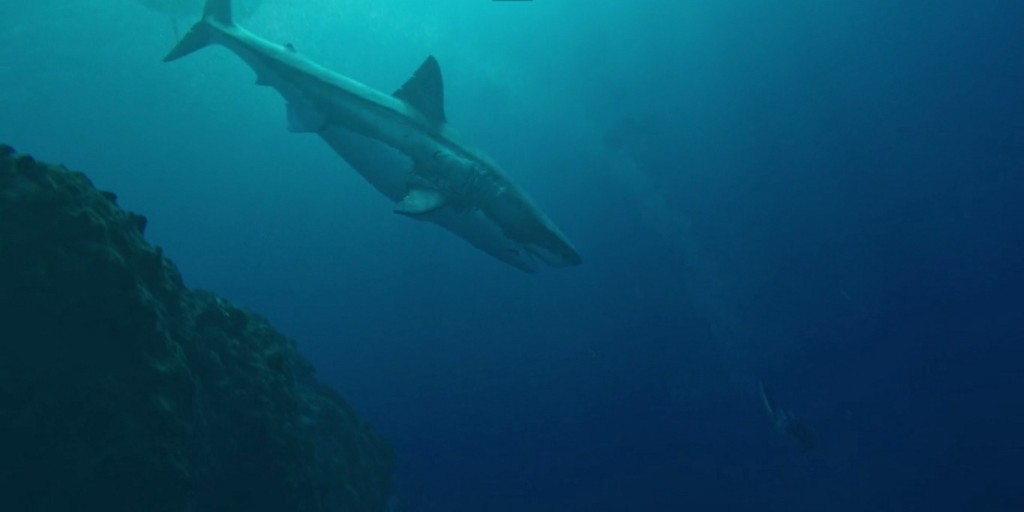
Shark Week 4: Just When You Thought It Was Safe to Go Back in the Water

It's been 10 years since I first thought it would be fun to commemorate Discovery's mega-popular annual Shark Week series of shows with a week of blog posts about shark movies, and somehow here I am again, for the fourth time, introducing another week of shark-related posts. Shark movies are more popular than ever (this piece about cult classic Shark Attack 3: Megalodon is the most popular post on this entire blog, by a significant margin), with dozens of low-budget shark-themed thrillers being released every year. Most of them, of course, are very bad, and not really worth commenting on.

For this latest edition, I looked back into the past to find a few obscure older shark movies, but I couldn't resist including at least one terrible recent shark movie with a ridiculous pun for a title (although I still refuse to cover any of the Sharknado movies). And the week will end with my take on the fourth and final Jaws movie, which seems like a good way to bring this project to a close for good (at least until a bunch more crazy shark movies are released that I absolutely must write about).

New posts will start later today and go through the week. In the meantime, catch up on all the posts from Shark Weeks past:

Shark (1969)
She Gods of Shark Reef (1958)
Deep Blue Sea (1999)
Spring Break Shark Attack (2005)
Dark Waters (1993)
Open Water (2003)
Jaws (1975)
The Deep (1977)
Shark Attack 3: Megalodon (2002)
Tintorera: Killer Shark (1977)
Beyond the Reef (1981)
Sharktopus (2010)
The Adventures of Sharkboy and Lavagirl (2005)
Jaws 2 (1978)
Snow Shark: Ancient Snow Beast (2012)
The Reef (2010)
Shark Night (2011)
2-Headed Shark Attack (2012)
Bait (2012)
Dark Tide (2012)
Jaws 3 (1983)

(Image part of the Build-a-Bear Shark Week line, of course.)

Friday, July 13, 2018

Triskaidekaphilia: 'Friday the 13th: The Orphan' (1979)

On the 13th of each month, I write about a movie whose title contains the number 13.

For a while, every time the 13th fell on a Friday, I would make sure to cover one of the movies in the long-running Friday the 13th horror franchise in this space. Eventually, I ran out of options, having to leave off a few movies at the end of the series since they don't have 13 in their titles. But now, in the tradition of 1933's Friday the Thirteenth, here's another movie that shares a title with the adventures of Jason Voorhees but has absolutely nothing to do with the hockey-masked killer. In fact, if IMDb is to be believed, the producers of the more famous Friday the 13th actually had to cut a deal with the producers of Friday the 13th: The Orphan in order to get the rights to the title, since The Orphan was released first (although subsequent releases often omit the first part of the title).

Online reports also indicate that despite its 1979 release date, the bulk of The Orphan was actually shot in 1968, with writer/director/co-editor John Ballard spending the next decade cobbling together the resources for post-production. That protracted editing process might explain why the resulting movie is so incoherent and disjointed, a series of scenes that feel like they were strung together almost randomly, with key elements missing (other online reports claim that the 85-minute version currently available is 30 minutes shorter than Ballard's original cut). Whatever the reason, The Orphan is a complete mess, both tedious and bizarre, with jarring tonal shifts, inappropriate music cues, characters who come and go at random, and a story that's dull and slow until it goes completely bonkers.

That story is loosely based on the famous short story Sredni Vashtar by Saki, although many of the details are changed and expanded. The main character is young David (Mark Owens), who's apparently witnessed his parents die in a (possibly accidental) murder-suicide, and has now been placed in the care of his stern Aunt Martha (Peggy Feury). Martha keeps David confined to the family's sprawling estate and denies him the pleasures of eating toast (one of the movie's more absurd plot points), and for long stretches The Orphan is mostly just about mundane family squabbles, interspersed with disconcertingly cheery montages set to jaunty music. David's father spent much of his time traveling in Africa, and eventually David builds a sort of shrine to a stuffed monkey his father brought back from one of his trips, and that's when things finally get weird.

The Orphan isn't quite a horror movie, although it features some surreal and grotesque imagery in its final act, and it eventually builds up a modest body count. It's more of a psychological thriller about David's unraveling mental state, although Owens isn't quite a good enough actor to make that descent into madness convincing (to be fair, it's a lot to place on a child actor), and the narrative is too jumbled to convey the progression of David's madness. Instead it just stumbles from one odd image to another, often repeating and doubling back on itself, until the chilling final moment when David finally gets to eat some toast.

Sunday, June 24, 2018

VODepths all-dinosaur edition: 'The Jurassic Dead,' 'The Jurassic Games'

Usually I try to include three movies in these occasional VOD round-ups, but when I received screeners for two dinosaur-themed straight-to-VOD movies that were being released on the same day (and just a week before the release of Jurassic World: Fallen Kingdom), it seemed obvious that I should throw together a quick edition of this column to cover them both. Since Fallen Kingdom itself is actually very similar to a dopey dino B-movie (albeit with much better special effects), it would probably fit right in with these opportunistic knock-offs.

The Jurassic Dead (Ruselis Aumeen Perry, Andy Haman, Mia Klosterman, dir. Milko Davis and Thomas Martwick) Despite multiple prologues and an onscreen text crawl at the beginning of The Jurassic Dead (also known by the equally ridiculous title Z/Rex), I had basically no idea what was happening for most of the movie's running time. Like a lot of no-budget B-movies, it promises a grand sci-fi world but mostly takes place in a bunch of dingy corridors, in this case inside some sort of secret government facility in the middle of the desert. That's where a stranded group of teenagers and a group of mercenaries (or maybe special operatives?) come together after a meteor strike (or maybe a missile attack?) wipes out all electronics and possibly releases a deadly toxin or virus into the outside world? None of this is ever clear, and is also not really important, since mostly the movie is about these characters running from some sort of zombified Tyrannosaurus Rex that the evil scientist villain has created (although I have no idea what dinosaurs have to do with his ultimate world-ending plan), and then also fleeing from each other when contact with the T. Rex (or Z/Rex, per the title) turns them into zombies, too. Nothing makes any sense, the acting is terrible, the characters are dumb cartoonish stereotypes, and the special effects are beyond atrocious. Nearly the entire movie is shot against a green screen, with even simple locations like hallways created via CGI, and it looks like the characters are in that old Nickelodeon game show where kids were inserted into arcade games. Not even a zombie dinosaur eating people can make this movie watchable. Available on Amazon and elsewhere.

The Jurassic Games (Adam Hampton, Katie Burgess, Ryan Merriman, dir. Ryan Bellgardt) Compared to The Jurassic Dead, The Jurassic Games is practically Jurassic Park, but it's still mostly terrible. Mixing a bit of The Hunger Games with a bit of The Running Man plus a bunch of dinosaurs, Games takes place in a future where death row inmates are given the chance to win their freedom in a deadly virtual reality game that is watched by hundreds of millions of people. Ten convicted killers are placed in a world where they're pursued by dinosaurs and other dangerous prehistoric creatures, and if they die in the game then they die for real. They're also allowed to kill each other, and since the last person standing wins freedom, there's really no good reason for them not to just fight to the death immediately and ignore the dinosaurs. There are a lot of plot holes here, of course, but director and co-writer Ryan Bellgardt just barrels right through them, and at times the movie is silly and exciting enough for that to work out. Ryan Merriman perfectly captures the smarm of reality TV hosts as the game's master of ceremonies, and the filmmakers make good use of sports-style graphics and talking heads to give the games a sense of authenticity. But the contestant characters are all one-note and boring, the acting overall is inconsistent, and the creatures themselves are completely unconvincing, especially when shown in the harsh daylight. It's also a bit disappointing that the dinosaurs are virtual, since the contestants are essentially just playing a really high-stakes video game. There's a moment when one of the contestants asks another why the designers chose dinosaurs to chase them around, and the second contestant jokes that they tested better than robots. That's probably about as thoroughly as the filmmakers thought through this premise, which plays like it started with the title and then filled in the rest from there. Available on Amazon and elsewhere.

Saturday, June 23, 2018

Bette Davis Month Bonus: 'Hell's House' (1932)

Oftentimes in these quick and cheap programmers that Bette Davis made in the 1930s, she has a small part and relatively low billing, which means just a few scraps for Davis fans to hang onto. For some reason, 1932's Hell's House gives Davis top billing, but her part is just as small (if not smaller) than in other forgettable movies she made during the same time period. Pat O'Brien is billed just under Davis (and they're both prominently featured on the poster), but the real star is neither Davis nor O'Brien, but Junior Durkin as Jimmy, an annoyingly naive teen who gets caught up in a bootlegging operation (without even knowing it) and shipped off to juvenile detention.

Jimmy is such a simpering loser that it's hard to feel bad for him as he's stuck in the mildly abusive reform school, where kids are forced into hard labor (which appears to involve stacking bricks into endless piles) and punished by being forced to stare at a line on a chalkboard until they pass out. It's pretty tame stuff, but of course Jimmy can't handle it, and he's desperate to get back to his aunt and uncle, and more importantly to gangster Matt Kelly (O'Brien), the guy who got Jimmy in trouble in the first place. Jimmy is absurdly loyal to Kelly, whom he meets at his aunt and uncle's, where Kelly is renting a room. They've only known each other a few days when Kelly hires Jimmy to watch over his warehouse full of illegal booze, and Jimmy gets nabbed by the cops just a few minutes into his first day on the job. Despite this obvious set-up, he takes three years in juvie over ratting out his new best friend to the authorities.

Jimmy's love for Kelly has some serious homoerotic undertones, as does his relationship with fellow inmate Shorty (Junior Coughlin), who always calls Jimmy "big boy" and basically dies in Jimmy's arms from his heavily foreshadowed heart condition. It's all absurdly overwrought, with Durkin playing up Jimmy's good-hearted innocence so excessively that he becomes irritating and difficult to root for. And Kelly isn't much of a hardened gangster, barely shown doing anything menacing and portrayed as more of a coward for letting Jimmy take the fall for his (extremely non-specific) crimes.

Oh, and Bette Davis is also in this movie. She plays Kelly's girlfriend Peggy in just a handful of scenes, and she's suitably spunky, taking a shine to dopey Jimmy and later scolding Kelly for letting the kid rot away in juvie for crimes he didn't commit. She looks stylish and puts a bit of attitude into her lines, but Peggy is little more than a plot device, a tool for exposition and for getting Jimmy and Kelly to reconcile at the end. Davis deservedly received top billing in plenty of other movies in later years, but in this case she doesn't contribute much, and her name recognition probably wasn't yet strong enough to make an impact.

Tuesday, June 19, 2018

VODepths: 'Bark,' 'The Nursery,' 'Soft Matter'

Bark (Annie Brennen, Caitrin Gallagher, Eli Rubenstein, dir. Anna Nilles and Marco Jake) Three young siblings (two in high school, one in college) deal with their mother's suicide in a movie occasionally narrated by the voice of their dog in Bark, which sounds like it would be cutesy and sentimental, but is actually slow and naturalistic, with a lot of silent long takes and awkward interactions. Writer-directors Anna Nilles and Marco Jake withhold some basic information at first, including the nature of the mother's death, but their revelations are so restrained that initially I wasn't even sure what they were meant to convey. Some of the mumblecore-style bickering among the siblings is entertaining, but it's more often just tiresome, and there are some weird metafictional elements (in one scene another actor walks onscreen to essentially "tag out" the main actor playing the teenage brother, saying that the directors want him to take a break) that seem jarringly out of place. Even the conceit of the narration from the dog is inconsistent, reaching its culmination in a scene that feels like it should be the end of the movie, then completely dropped as the movie continues on. The occasional lyrical passages aren't enough to compensate for the disjointed structural composition. Available on No Budge.

The Nursery (Maddi Conway, Emmaline Friederichs, Carly Rae James Sauer, dir. Christopher A. Micklos and Jay Sapiro) At one point in The Nursery, one of the characters describes what's happening as "textbook ghost stuff," and that's a pretty fair description for this occasionally passable, entirely generic micro-budget horror movie. A college student babysits at a remote house where vaguely spooky things start happening, and when her friends show up to visit her, they're all terrorized by a malevolent spirit that may or may not be connected to the family that lives in the house and their young baby that Ranae (Maddi Conway) is charged with watching. It takes a little while for the story to get going, and once things start moving, the scares are pretty familiar loud noises and sudden apparitions. The filmmakers try to deepen the narrative by giving Ranae a tragic back story that just comes off as melodramatic, although the performances are fairly strong for a movie of this small a scale. The reveal of the ghost's true nature is pretty underwhelming, the kills are tame, and the conclusion is anticlimactic, brushing aside all the death and danger preceding it. It's textbook ghost stuff, and not even a particularly engaging textbook. Available on Amazon and elsewhere.

Soft Matter (Ruby Lee Dove II, Hal Schneider, Mary Anzalone, dir. Jim Hickcox) I don't even know where to start with the bizarre sci-fi/horror movie Soft Matter, which exists somewhere around the intersection of Troma, John Waters and Harmony Korine. It's certainly one of the grossest movies I've ever seen, the kind of movie in which a character is speaking entirely literally when she calls someone "a disgusting bag of slime." The plot, such as it is, involves two scientists experimenting on patients at an abandoned nursing home in order to discover the secret to immortality, in which they are thwarted by both an ancient sea goddess living in a mop bucket and a pair of hipster artists looking to stage an installation in a decrepit building. There are some moments of deadpan humor and some creative animated interludes, but mostly this is a movie that is just weird and off-putting and unpleasant for the sake of it. Watching a disgusting bag of slime bust out some dance moves to a synth-pop groove is kind of entertaining at first, but a string of inexplicable moments like that eventually just gets to be tedious. Available on Amazon and elsewhere.

Wednesday, June 13, 2018

Triskaidekaphilia: 'Mercury 13' (2018)

On the 13th of each month, I write about a movie whose title contains the number 13.

Given the massive success of Hidden Figures, I imagine it's only a matter of time before the Netflix original documentary Mercury 13 gets optioned for a major studio feature film. It's another inspirational story of smart women pushing against entrenched prejudices at NASA, in this case a group of 13 female pilots who went through an unofficial astronaut training program in the early 1960s, only to be denied the chance to be considered for actual space flight. There's not quite the same happy ending as in Hidden Figures, though, since none of the women ever ended up going into space (although at least some of them went on to thriving aviation careers). Still, it's hard not to be at least a little moved by the testimonials from these determined women and the injustice they suffered.

As a movie, Mercury 13 isn't all that impressive; directors David Sington and Heather Walsh combine talking-head interviews (with some of the surviving pilots and relatives of those who've passed away) with archival footage to tell the story of 13 female aviators who were recruited by NASA medical specialist Dr. Randy Lovelace to undergo the same battery of physical and mental tests as the famous Mercury Seven male astronauts (famously depicted in The Right Stuff). Lovelace was convinced that not only could women be just as qualified as men to participate in space missions, but also that in some ways they might make for superior candidates. Without NASA authorization, he initiated his own program to test and train women, but he was ultimately shut down when his plan progressed to having the women train on military fighter jets.

A little while later, there was a Congressional hearing about the possibility of having the women officially join the astronaut training program, but that led nowhere, and it wasn't until the 1980s that NASA actually put women on its space missions. Sington and Walsh lay out all this information in a mostly straightforward, pedestrian fashion, and the interview subjects are compelling enough to keep the movie engaging over most of its slim 79-minute running time. But the directors also pad out the film with cheesy re-enactments (including a hokey speculative version of women participating in the first moon landing) and lots of lovely but questionably relevant footage of airplanes in flight. There's also an overbearing score to juice the emotions that are plenty powerful on their own. The result is a movie that succeeds almost in spite of itself, because no amount of lackluster filmmaking could undermine the emotional impact of the story and the inherent charm and grit of the women portrayed.

Tuesday, May 15, 2018

VODepths: 'Cartel 2045,' 'Darc,' 'Dead List'

Cartel 2045 (Brad Schmidt, Danny Trejo, Alex Heartman, dir. Chris Le) There's kind of a cool sci-fi premise at the heart of Cartel 2045 (also known as Juarez 2045), in which sophisticated military robots have become just another weapon to be stolen, co-opted and junked when no longer useful. Here, they've been smuggled to Mexican drug cartels, who use the deadly bots to assert their dominance in organized crime. The idea of futuristic technology becoming scrap to be scavenged by criminals reminded me a bit of Neill Blomkamp's Chappie, not that anyone should be trying to emulate that movie. But there's the potential to explore some interesting sociopolitical elements here, even on a low budget. Writer-director Chris Le doesn't care about any of that, though, and instead fills the overlong movie with repetitive, listless action sequences populated with interchangeable characters. There's a former Marine released from prison so that he can join a team of fellow Marines in tracking down the contraband droids, but his shady back story turns out to be irrelevant, and his look and personality are barely distinguishable from his teammates. Danny Trejo chews some scenery as the evil drug lord, but even he can only carry things so far, and the rest of the performances are flat and uninspired. The effects aren't terrible, as long as the robots don't have to interact with the actors (in which case they almost always look like they're in separate images), but the fake film grain just highlights how far this movie is from a genuinely creative and entertaining B-movie. Available on Amazon and elsewhere.

Darc (Tony Schiena, Armand Assante, Shô Ikushima, dir. Julius R. Nasso) At first glance, Darc seems like a run-of-the-mill low-budget action movie, with a stock plot about a determined badass seeking revenge for the death of his mother. And for the most part, that's what it is, with Tony Schiena playing Jake Walters, who as a child witnessed his prostitute mother's murder at the hands of a Yakuza boss. The adult Jake (who also goes by the name Darc, inspired by a manga hero he read about as a child in Japan) is sprung from prison, where he's serving a sentence for unspecified crimes, by an Interpol agent played by a mumbly Armand Assante, tasked with rescuing the agent's daughter from the very same Yakuza boss who killed Jake's mom. Lots of violence and gratuitous nudity follows. What sets Darc apart is that it's a vanity project for star and co-writer Schiena, who is a private security contractor, activist, combat veteran and martial-arts champion with an insane Wikipedia entry that he almost certainly wrote himself. The action here is pretty solid, and Schiena is passable as a stoic man of action (or at least is no worse than Steven Seagal would've been in the exact same role 30 years ago), but the violence is repetitive and mind-numbing, the tone is vaguely misogynistic, and the presentation of the title character is so self-aggrandizing that it verges on parody. Available on Netflix.

Dead List (Deane Sullivan, Jan-David Soutar, Josh Eichenbaum, dir. Holden Andrews, Ivan Asen, Victor Mathieu) An actor invokes an extremely ill-defined curse in order to win a role in a Martin Scorsese movie, but the jumbled quasi-anthology structure of Dead List means that people start dying before it's clear who they are or why they've been targeted. Even after we see Cal (Deane Sullivan) acquire a mysterious mystical book and enact some ritual from it, the movie has a hard time conveying what he's summoned or how it works. The vignettes (written and directed in various combinations by the three filmmakers) feature Cal's rival actors dying in what seem to be meant as sort of ironic, Twilight Zone-style circumstances, but it's tough to tell what the connections to their lives are meant to be when we barely know anything about the characters. One short piece in which a victim dies by being transformed into a black man and then gunned down by police at least has the basic premise of one of those stories, but there's no real reasoning behind it. Other segments are tedious and/or excessively gross, and the production values are pretty terrible, with ugly visuals, subpar effects and questionable acting (absolutely none of these people would be up for a role in an actual Scorsese movie). Available on Amazon and elsewhere.

Sunday, May 13, 2018

Triskaidekaphilia: 'Locker 13' (2014)

On the 13th of each month, I write about a movie whose title contains the number 13.

The low-budget horror anthology is a venerable genre tradition going back decades, and I've even written about a couple of them (Last Stop on 13th Street and Hellblock 13) in this space before. There's no way that Locker 13 is going to take its place alongside movies like Black Sabbath or Tales From the Crypt or Creepshow, but it's slightly better than its obscure straight-to-video pedigree would indicate. It features a cast full of veteran B-movie stars and character actors (including Curtis Armstrong, Jon Gries, Thomas Calabro, Jon Polito and David Huddleston), mostly giving decent performances, and its individual stories are all fairly concise. The production values are bare-bones, but they're professional enough, and forgiving horror buffs may find this movie to be an acceptable time-passer.

The first full segment is actually pretty good, starring Ricky Schroeder as a washed-up boxer who acquires a mystical pair of boxing gloves from a mysterious stranger and finds himself easily pummeling younger, stronger opponents. He pounds them so hard that they end up dead, though, and he has to face the consequences of his late-breaking rise to fame. The story ends with the kind of Twilight Zone/E.C. Comics twist that these anthologies often rely on, and it's an effective stinger for a nasty but engaging tale. Schroeder conveys the regret of a man whose glory days are behind him (probably not hard for the former child star to relate to), and Polito is his typically dyspeptic self as the boxer's opportunistic manager.

Unfortunately the rest of the stories are not nearly as strong. The wraparound story takes place in an Old West amusement park, with Gries as the veteran employee showing new night janitor Skip (Jason Spisak) the ropes. Gries' Archie tells the movie's first four stories to Skip as they tour the park, and then when Skip is left alone to work, he gets his own story. The other tales include an initiation gone awry at a secret society in the early 20th century; a suicidal jumper getting a unique pep talk; and a hitman interrogating three women who may have hired him. In Skip's story, he discovers that his locker (number 13, of course, which also shows up in three of the other stories) holds a portal to another version of himself.

Unlike the boxing story, those other segments just kind of peter out, without the same punch (so to speak) to tie them together. It's hard to discern a lesson, or even a point, to those segments, and they're not exactly scary or unsettling, either. There are solid performances throughout, including from Huddleston as the creepy leader of the exclusive lodge, Gries as the cheerily philosophical theme-park janitor and Krista Allen as one of the hitman's captives, and the pacing is relatively brisk. With some sharper writing, Locker 13 could have been an underrated horror gem, but as it is, it's only about one-fifth of a gem.

Thursday, April 26, 2018

VODepths: 'For the Coyotes,' 'Josephine Doe,' When the Starlight Ends'

For the Coyotes (James Carpenter, Joshua Schell, dir. Eric Daniel Metzgar) It's not too surprising that the small-scale two-character drama For the Coyotes was at one time meant to be a stage play, since writer-director Eric Daniel Metzgar plays out many of the scenes between dying religious scholar Wendell (James Carpenter) and his tech-entrepreneur son Josh (Joshua Schell) in static long takes, as the two sit at a table or stand in Wendell's kitchen and rehash their past. Estranged for years, father and son reunite when Wendell calls Josh and insists he come to Wendell's remote rural home, where Wendell reveals that he has terminal brain cancer. The title refers to Wendell's wish for a so-called "sky burial," leaving his body to be devoured by wild animals, which Josh vehemently opposes, at least at first. Although Metzgar throws in lots of arty nature shots and ponderous philosophical and religious soliloquies, this is at heart a fairly predictable drama about reconciliation between parent and child as one is about to depart the mortal world. The lead performances (especially from Carpenter, selling Wendell's spiritual bullshit) are impressive, and some of the images are pretty, but the story is rather superficial despite its existential musings, and the characters' arguments are mostly tedious and repetitive. Available on No Budge (free) and Vimeo.

Josephine Doe (Erin Cipolletti, Emma Griffin, Elisabeth Bennett, dir. Ryan Michael) The title character of Josephine Doe (Emma Griffin) is a figment of main character Claire's imagination, but it's never quite clear why Claire is having such a vivid, realistic hallucination, what kind of condition she might be suffering from, or what anyone can do about it. As a portrayal of mental illness, this movie is borderline irresponsible, although it's obviously more interested in being a lyrical drama about dealing with grief and family trauma, at which it's only marginally more successful. Erin Cipolletti, who also wrote the screenplay, gives a strong performance as Claire, who's reeling from the death of her father and clashing with her more stable sister, but her motivations remain opaque. Josephine is sort of a manic pixie dream girl type of imaginary friend, wearing quirky clothes and pushing Claire to do wacky stuff like break into a roller rink to go skating in the middle of the night. I kept waiting for some kind of twist that would explain why no one is more than mildly concerned about Claire's full-on manifestation of another person, but it never came. The black-and-white cinematography is sometimes evocative, but it seems to be standing in for other artistic ambitions that are never quite achieved. Available on Amazon and elsewhere.

When the Starlight Ends (Sam Heughan, Arabella Oz, Sean Patrick Flanery, dir. Adam Sigal) Thanks to star Sam Heughan's newfound fame and sex-symbol status on Outlander, terrible micro-budget romantic drama When the Starlight Ends is certainly reaching more viewers than it otherwise might have. I haven't watched Outlander, but Heughan's performance here is pretty bad, delivered with a horribly unconvincing American accent. He's not helped at all by the writing from filmmaker Adam Sigal, who sticks Heughan with nearly nonstop pompous voice-over narration from his character Jacob, a supposedly great writer who spews nothing but self-important pretentiousness. Jacob is devastated after he's dumped by his girlfriend Cassandra (Arabella Oz, daughter of TV's Dr. Oz), and he spends the entire movie moping and rehashing their relationship, via flashbacks as well as annoying "writerly" fantasies in which he casts Cassandra as different women he might meet and fall in love with. The distinction between past and present and between reality and fantasy is blurry at times, but not in a clever or illuminating way; it mostly just comes across as sloppy filmmaking. Jacob is insufferable, and his relationship with Cassandra never has the grand romantic feel that the movie needs in order to justify itself. Available on Amazon and elsewhere.